In Florida, the backyard gets used all year. The lanai, the pool deck and the patio kitchen are where a lot of living happens, so good outdoor sound is one of the upgrades people enjoy most. It is also one of the easiest to get wrong. Sun, rain, humidity and salt air are hard on speakers, and a system that sounds fine indoors can sound thin and patchy outside. Here is how to plan one that sounds good and lasts.
Outdoor sound works differently
Indoors, walls and ceilings reflect sound back to you, which makes speakers sound fuller. Outside there is nothing to bounce off, so bass fades fast and volume drops off quickly with distance. That leads to a common mistake: two speakers on the back wall of the house, turned up loud. People near the house get blasted, people at the far end of the pool hear almost nothing, and the neighbors hear everything.
The better approach is more speakers at lower volume, spread around the space so every seat gets even sound.
Choosing the right type of speaker
There are a few main styles, and many yards use more than one:
- Under-eave or wall-mounted speakers. Mounted under the roof overhang or on the lanai, where they get some cover from sun and rain. A good fit for covered patios and outdoor kitchens.
- In-ceiling outdoor speakers. For covered lanais and porches with a finished ceiling. They look clean and are protected from direct weather.
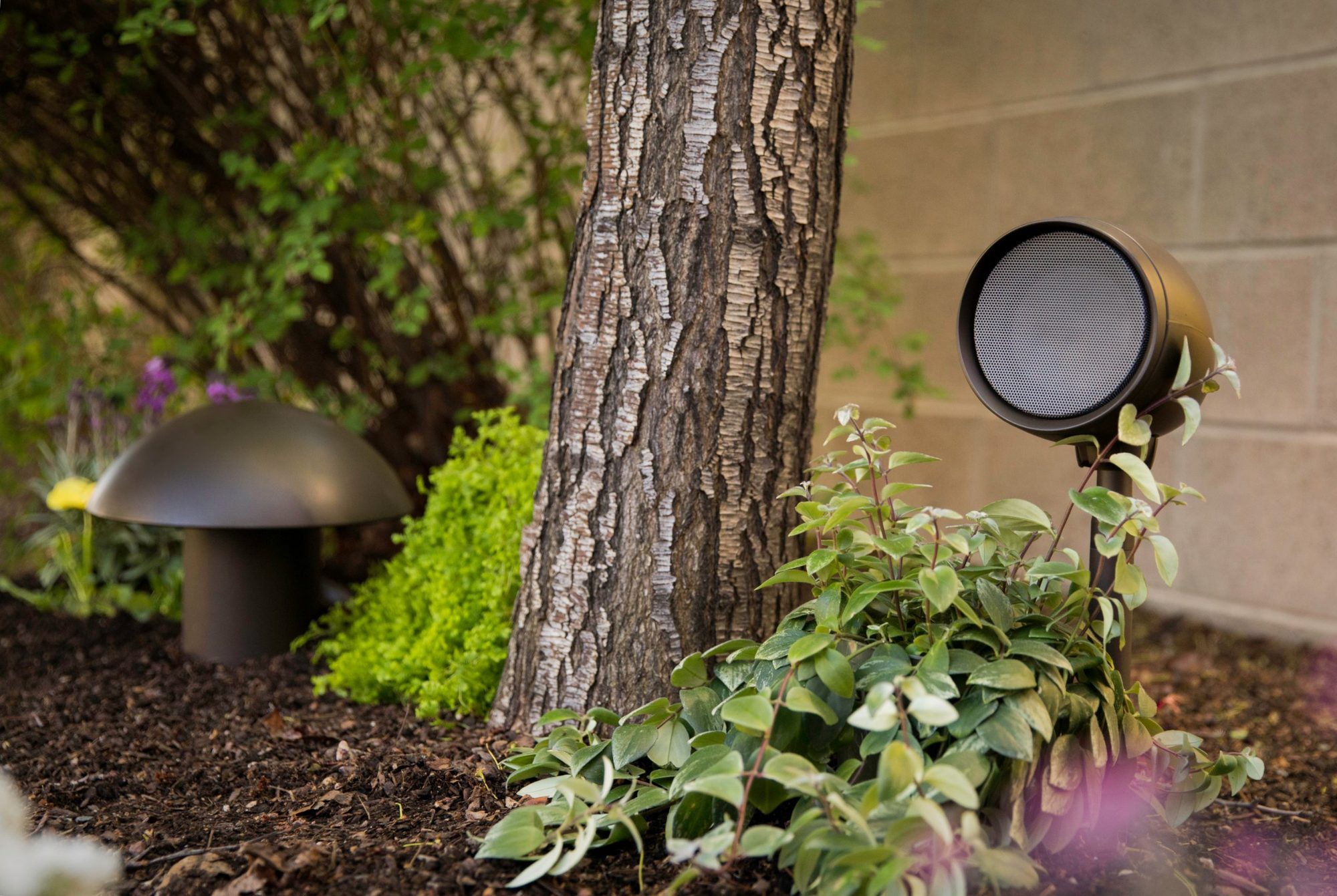
- Landscape or satellite speakers. Small speakers placed in planting beds around the yard, usually paired with a buried subwoofer. This is the best way to cover a large yard or pool area evenly.
- Rock-style speakers. Made to blend into landscaping. They work, but satellite systems usually sound better and are easier to hide in planting beds.
A subwoofer makes a big difference
Because bass disappears outdoors, small outdoor speakers can sound tinny on their own. An outdoor subwoofer, often buried in a planting bed with only the top showing, fills in the low end and lets the other speakers play at a comfortable volume. For most yards, one well-placed subwoofer is enough.
Built for Florida weather
Not every speaker sold as "outdoor" is built for Florida. When comparing models, look for:
- A real weather rating. Many speakers list an IP rating. The second number is water protection, and higher is better for exposed locations. A speaker meant for a covered porch may not hold up in full sun and rain.
- UV-resistant housings. Our sun breaks down cheap plastic, which turns chalky and cracks within a few seasons.
- Rust-resistant hardware. Stainless steel or coated brackets and grilles matter, especially near the coast where salt air corrodes metal quickly.
- Moisture-resistant drivers and terminals. Humidity reaches places rain does not.
Even a weather-rated speaker lasts longer when it is mounted under an overhang, angled slightly down so water drains, and kept out of the direct spray of sprinklers.
Plan the layout around how you use the space
Before picking speakers, think about where people actually gather:
- The lanai or covered patio, where people sit and eat.
- The pool deck, where people swim and lounge.
- The outdoor kitchen or bar, where people stand and talk.
- The open yard, if it is used for games or parties.
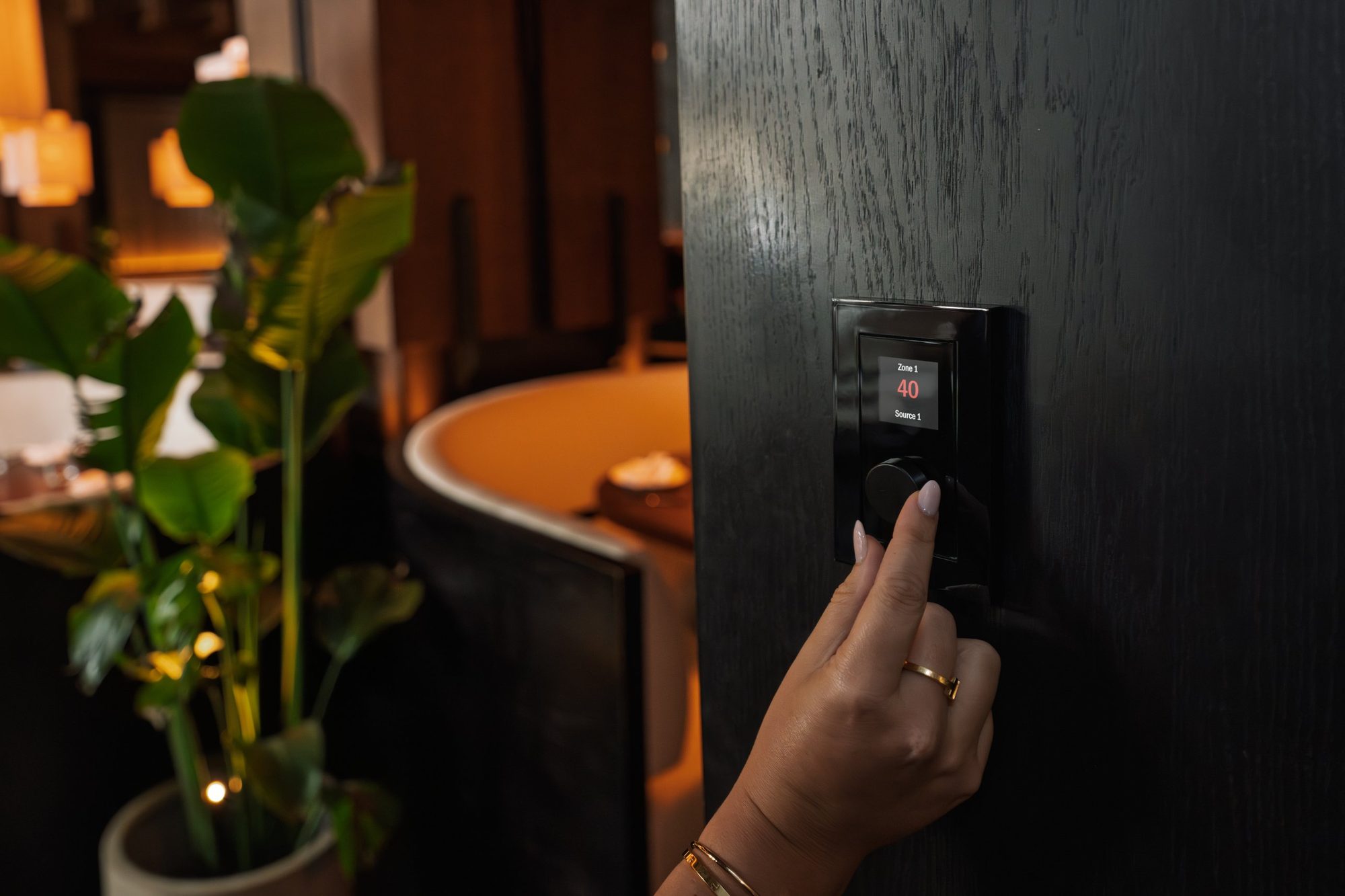
Each area can be its own zone with its own volume. That way you can have quiet background music at the dinner table and something livelier by the pool, or turn the yard off entirely late at night.
Aim speakers toward your seating areas and back toward the house, not out toward the property line. Your neighbors will thank you, and many Florida cities and HOAs have noise rules worth keeping in mind.
Wiring that holds up underground
Outdoor wiring is where many systems fail early. A few things matter:
- Use wire rated for outdoor and direct burial use. Indoor speaker wire breaks down when it sits in damp soil.
- Run wire in conduit where possible, especially under pavers, driveways and pool decks. It protects the wire and makes future changes far easier.
- Bury it deep enough to stay clear of edgers, aerators and new plantings, and keep a record of where it runs.
- Use waterproof connections at every splice. Florida soil stays damp, and moisture works its way into ordinary connectors.
If you are building a pool, redoing the pavers or landscaping, that is the time to run conduit, even if the speakers come later.
Keep the amplifier indoors
The speakers can live outside, but the amplifier and streaming equipment should not. Heat, humidity and storms are hard on electronics. Keep the gear in an air-conditioned space, such as an equipment rack or closet, and run speaker wire out to the yard.
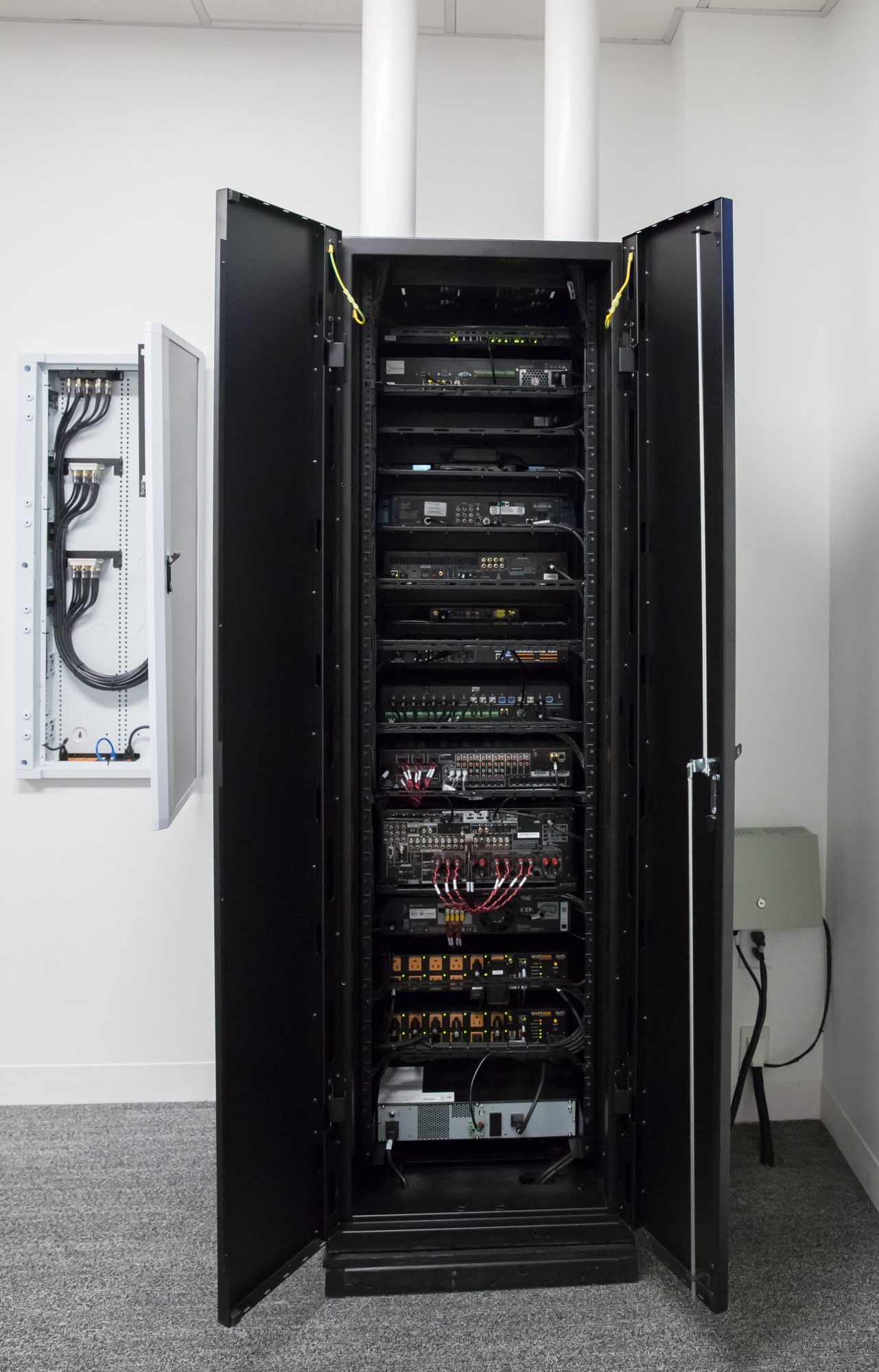
For large yards with many speakers or very long wire runs, installers sometimes use a 70-volt system, a design common in commercial spaces that handles long distances and many speakers more efficiently. For a typical backyard, a standard amplifier with properly sized wire works well.
Pools, power and safety
Electrical work near pools and spas is covered by specific code requirements for clearances and equipment. Speaker wire carries low voltage, but power outlets, amplifiers and any powered subwoofers need to be placed and installed to code. This is a good reason to have the system planned by someone who works with outdoor installs regularly.
Hurricane season and lightning
Outdoor systems take a beating in storm season. A few habits help:
- Landscape and buried speakers usually ride out storms well since they sit low and are anchored.
- Mounted speakers should be on solid brackets fastened into the structure. Speakers in exposed spots can be designed to come down quickly before a storm.
- Surge protection on the amplifier and equipment rack is a must. Lightning strikes near outdoor wiring can send a surge back into the house.
Simple control for everyone
The best outdoor system is one anyone can use. With the right setup, you can stream music from your phone, adjust each zone from an app or a weatherproof keypad, and tie it into a home automation system so a "Party" scene turns on the outdoor lights and music together.
Good outdoor sound should feel like it is everywhere you are, without being loud anywhere.
Where to start
Walk your yard and note where people sit, swim and cook, how far the farthest seat is from the house, and whether any patio, pool or landscaping work is coming up. With that, a good installer can recommend a speaker layout, zones and a wiring plan that fits your yard and your budget.